
L.A. Louver is deeply saddened to announce the passing of our dear friend and artist Tony Berlant, after an extended battle with Alzheimer’s disease. He was 85 years old, and is survived by his wife Helen Berlant, daughter Kate Berlant, and brother Jeff Berlant.
Berlant was born in New York in 1941 and moved to Los Angeles with his family at a young age. As a senior in high school, Berlant would traverse Los Angeles and Pasadena, visiting art galleries and museums, a time he revered as the last heyday of Abstract Expressionism. “I would see every show twice. Look at everybody’s picture and read everybody’s bio. I was very focused and I had a terrific time,” he recalled in a 1988 interview.
In 1959, Berlant attended the University of Southern California, and after one year, transferred to University of California Los Angeles, where he studied under famed painter Richard Diebenkorn and earned three degrees in three years: a Bachelor’s Degree, a Master of Arts in Painting, and a Master of Fine Arts in Sculpture. Berlant went on to teach in UCLA’s department of art from 1965-1969, along with Diebenkorn and William Brice.
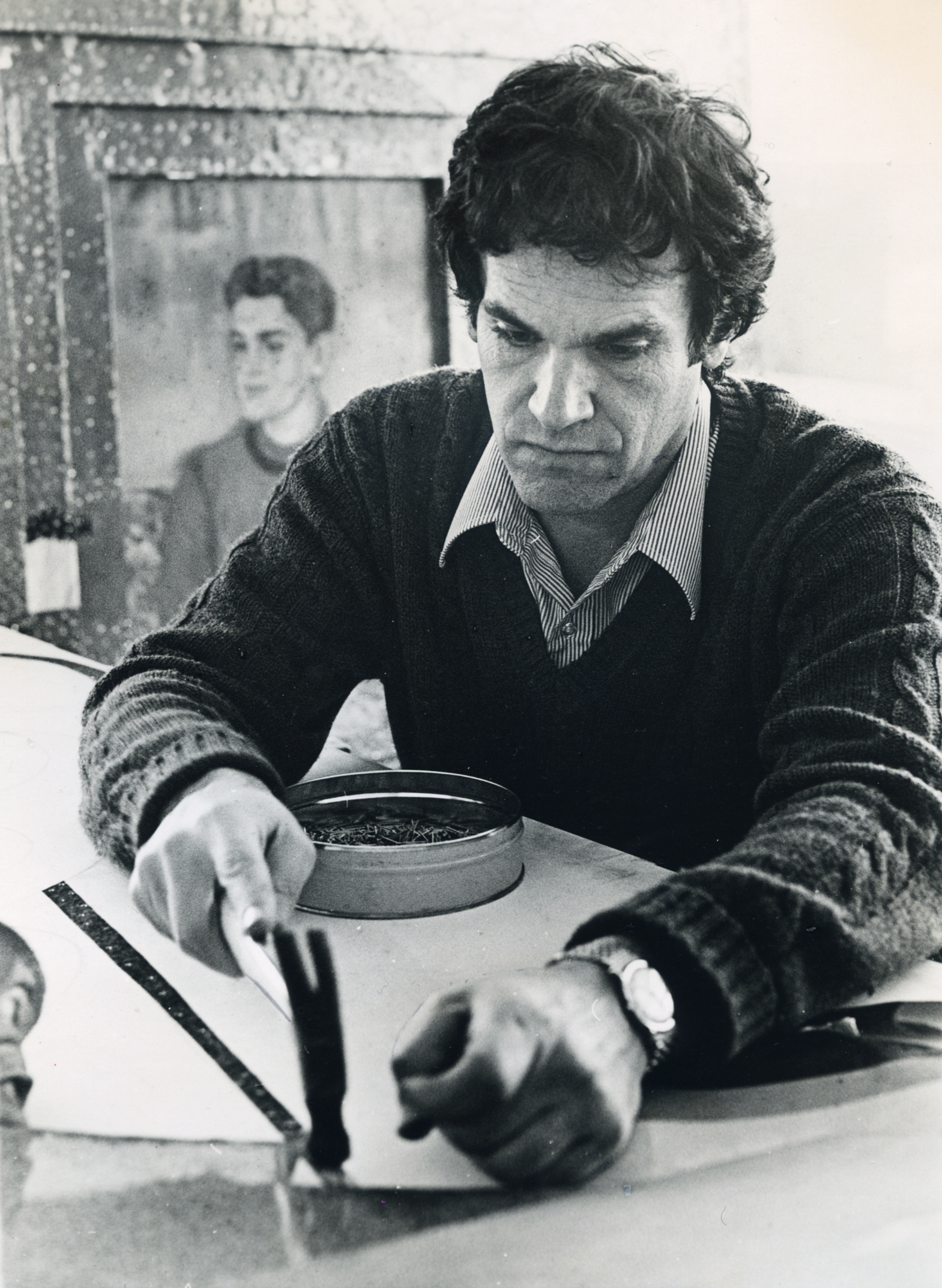
Berlant received his earliest recognition as an artist in 1960, when Clement Greenberg selected one of his paintings for inclusion in an exhibition of L.A. artists at the Los Angeles County Museum of Art. In 1964, LACMA awarded Berlant the New Talent Purchase Grant.
From that period, Berlant worked between New York and Los Angeles, though he considered Los Angeles “his village.” It is where he met Marcel Duchamp, partook in existential conversations with fellow artists at Café Tasco on Venice Boulevard, and created lasting friendships with artists Ed Moses, Vija Celmins, Ken Price, Charles Garabedian, Gwynn Murrill, Chris Burden and Nancy Rubens, Jimmy Hayward, and architect Frank Gehry, among many others in the burgeoning and vibrant art scene. Berlant was also admired and befriended by key curators and museum leaders including Evan Maurer and Paul Schimmel, and he held close relationships with collectors and art patrons such as Jay Last, Dallas Price, Thom Weisel, Dick Fredericks, and Paddy McKillen.
It was also in L.A. where he met his wife, Helen Méndez, a former performer and set designer, and after establishing his home and studio in Santa Monica, where their only daughter, comedian, actress, and writer Kate Berlant was born and raised.
Considered a “master of painting without paint,” Berlant was best known for his technique of collaging found and fabricated printed tin with steel brads onto wood panels, an art form he first explored in high school. Tin became his primary medium in 1963, when he began collecting metal signs used for advertising at a nearby corner market. Frames, houses, doorways, and windows were prevalent subjects throughout Berlant’s artistic career, metaphors Berlant described as “transitions between life and death, the secular and spiritual world.”
Berlant also went on to work with a local factory and learned how to manipulate the manufacture of the metal himself. This was a pivotal moment in Berlant’s practice, as he was able to print his own unique imagery onto the metal and control color and tone for the first time. Berlant expanded his practice to include large-scale compositions, both abstract and representational, that expertly weaved together collaged elements of tin that he painstakingly hammered onto the plywood frames.
L.A. Louver Founding Director Peter Goulds met Berlant in 1978, when they were introduced by Ed Moses, Richard Diebenkorn, and Charles Garabedian through their mutual ties at UCLA. Their friendship and respect for one another blossomed quickly, and Berlant was invited to participate in a group show at L.A. Louver in 1981. Berlant had his first solo exhibition at the gallery the following year, which coincided with a major exhibition of his work at LACMA. Throughout his representation by the gallery, Berlant created 18 more solo exhibitions and was included in 42 group exhibitions at L.A. Louver. Berlant’s most recent solo presentation with L.A. Louver occurred in 2025, featuring his house constructions created between 1966 and 2019.
In the 1980s, Berlant was also represented by New York art dealer Xavier Fourcade, who also counted Willem de Kooning, Joan Mitchell, Walter De Maria, Michael Heizer, and Barnett Newman on his roster.
Berlant’s work has been exhibited throughout the United States and internationally, including solo museum shows at the Whitney Museum of American Art, New York (1973); Contemporary Art Museum, Houston, Texas, and Los Angeles County Museum of Art (1982); Centro Cultural del Arte Contemporaneo, Mexico City, Mexico (1988); and The Contemporary Museum, Honolulu, Hawaii (2003). His work is included in major private and public collections, including LACMA, the Hammer Museum, and Museum of Contemporary Art, Los Angeles; The Huntington, San Marino, CA; San Francisco Museum of Modern Art; Art Institute of Chicago; Philadelphia Museum of Art; Whitney Museum of American Art, New York; and Hirshhorn Museum and Sculpture Garden, Washington, D.C.
Beyond the studio, Berlant’s limitless curiosity and indefatigable intellect were also expressed through his collecting interests. From the time he was a child, he collected mineral specimens and fossils, and later, his passions and areas of expertise expanded to Native American art, textiles, and early human objects, such as figure stones and hand axes. He would often travel to various desert regions to acquire indigenous artifacts, pottery, weavings, and artworks, all of which were considered major influences in his life and studio. In this way, the artist became a dealer, as Berlant sold objects to artist friends and helped shape the Navajo blanket collections of Frank Stella, Donald Judd, Joseph Cornell, Andy Warhol and others.
In the early 1970s, the artist James Turrell introduced Berlant to the anthropologist Steven LeBlanc. Berlant and LeBlanc began a decades-long collaboration, and they formed The Mimbres Foundation, a local archaeological conservancy working to protect vulnerable sites along the Mimbres River Valley in New Mexico. Berlant also worked with institutions including LACMA (1972, 2018) and Palm Springs Museum of Art (1990) to exhibit and publish scholarly catalogs on Native American Art. From 2002, Berlant was a Research Affiliate at the Peabody Museum of Archaeology and Ethnology at Harvard University. In 2018, Berlant co-curated two key exhibitions with works from his personal collection and loans from significant institutions: “First Sculpture: Handaxe to Figure Stone” (with Thomas Wynn, University of Colorado) at the Nasher Sculpture Center in Dallas and “Decoding Mimbres Painting: Ancient Ceramics of the American Southwest” at LACMA (with Evan Maurer, director emeritus of the Minneapolis Institute of Art). Most recently, L.A. Louver exhibited a selection of blankets from his personal collection by Navajo (Diné) weavers in the Spring of 2026.
In a 2018 Los Angeles Times interview, Berlant reflected on the concept of memory: “I realize now that my life has been a lot more exciting when I talk to people. But I’ve forgotten a lot of the exciting stuff that happened. Just follow your instincts and do what makes you happy. That’s what artists do. They work from inner need, necessity, ideally. And it’s a wonderful thing to do, inexplicably wonderful. And I tell my daughter, who’s an incredibly gifted comedian-actress, just look both ways when you cross the street.”
We will miss Tony beyond words and are forever grateful for the many years spent with a brilliant artist and friend.